Designing a recognition program for top-performing agencies

Context
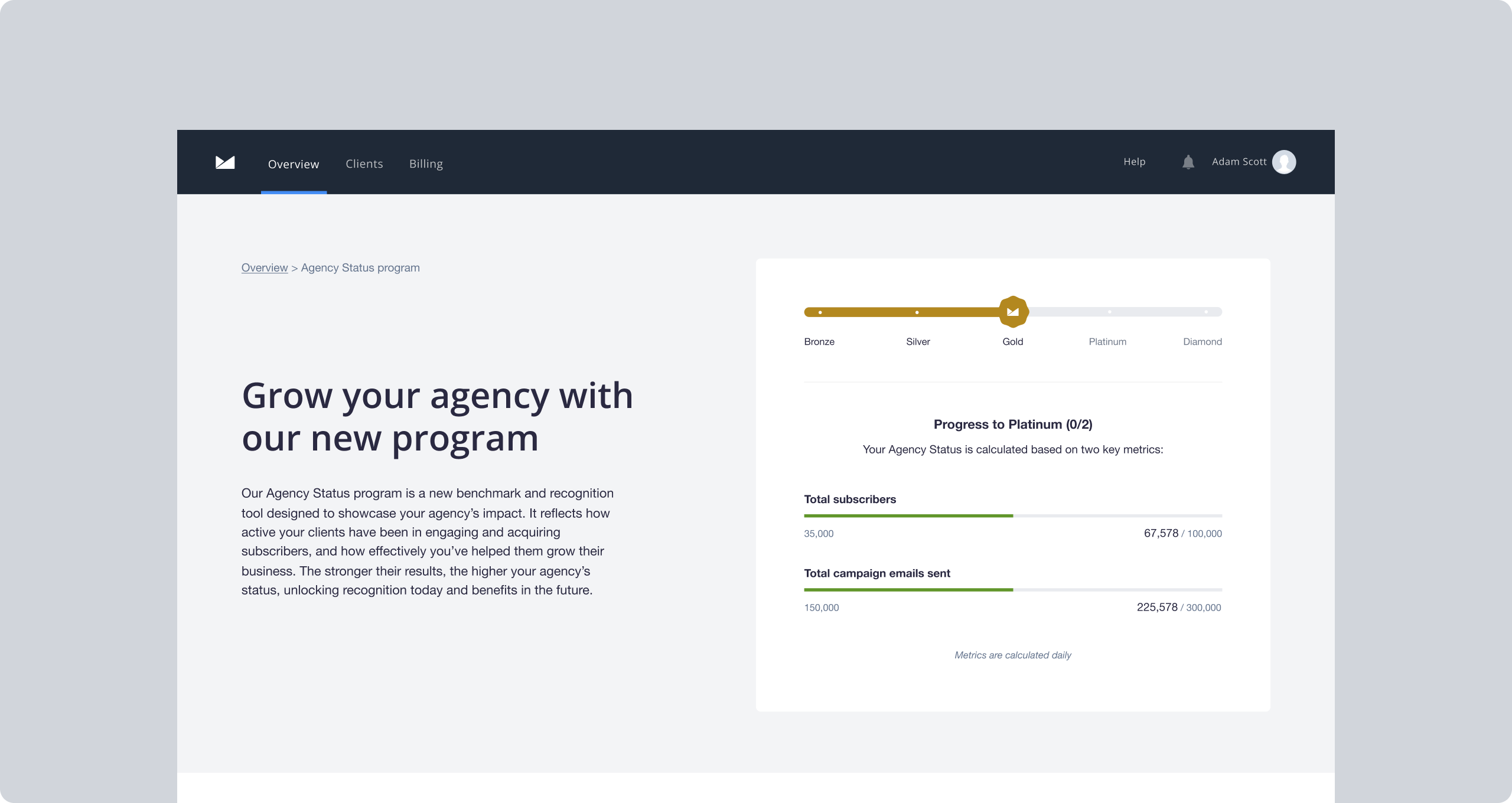
Launched in beta in 2025, the program helps agencies track their progress and gain recognition for their contribution to the platform, while giving the business a reliable way to identify high-value partners and deliver targeted support. Before the program, there was no standardised approach to measure agency success, making it difficult to act on retention in a meaningful way. This presented an opportunity to create a program that benefits both agencies and the business, while laying the foundation for future partner initiatives.
How might we design a recognition framework that makes agencies feel seen and supported, while giving the business a scalable way to identify and reward top performers?
Research
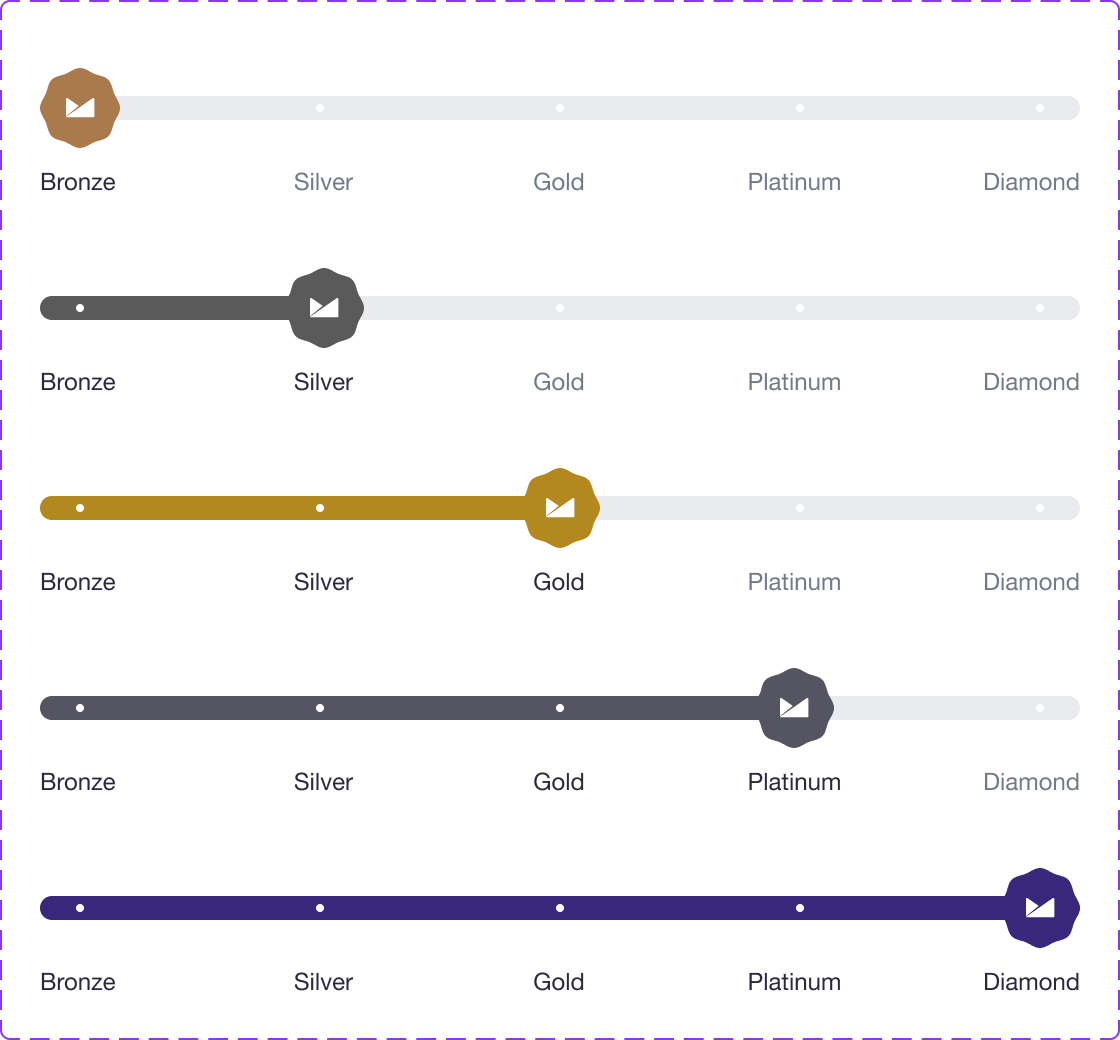
Most agencies would start with no status
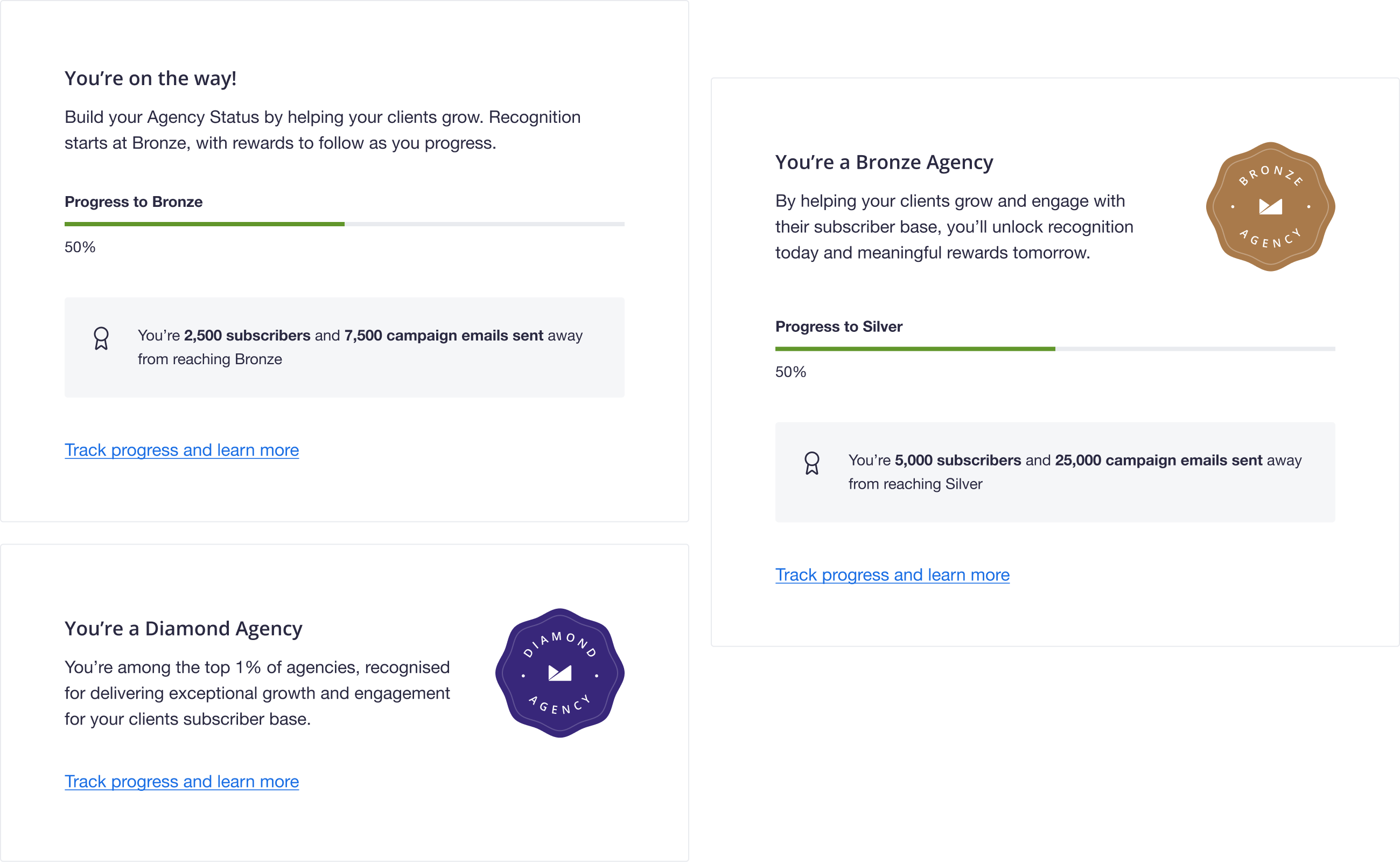
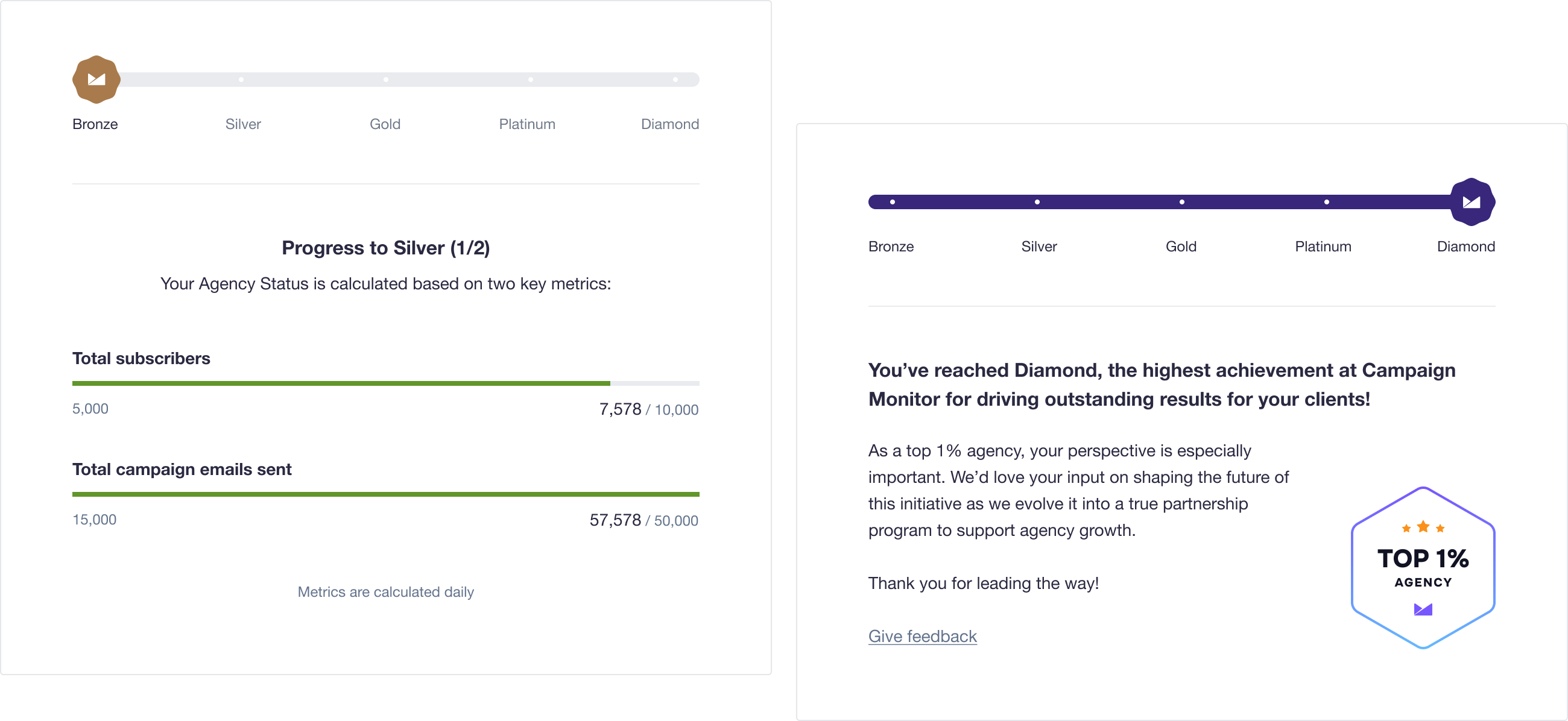
The majority of agencies wouldn't meet the minimum requirements for a status tier at launch. This impacted how I approached the experience, no-status wasn't an edge case, it would be the most common entry point and needed to feel motivating rather than discouraging.
Some agencies would qualify for the highest tier at launch
At the opposite end, a small group of agencies would enter the program at Diamond. The experience needed to work equally well for agencies just getting started and those already at the highest level.
The program would launch without benefits
The beta release intentionally launched before benefits and incentives were defined. Without tangible rewards, the design needed to communicate value through visibility, progress, and recognition. Getting the tone right, honest about where things were and genuinely exciting about where they were going, became a key design challenge.
Key Interface Decisions
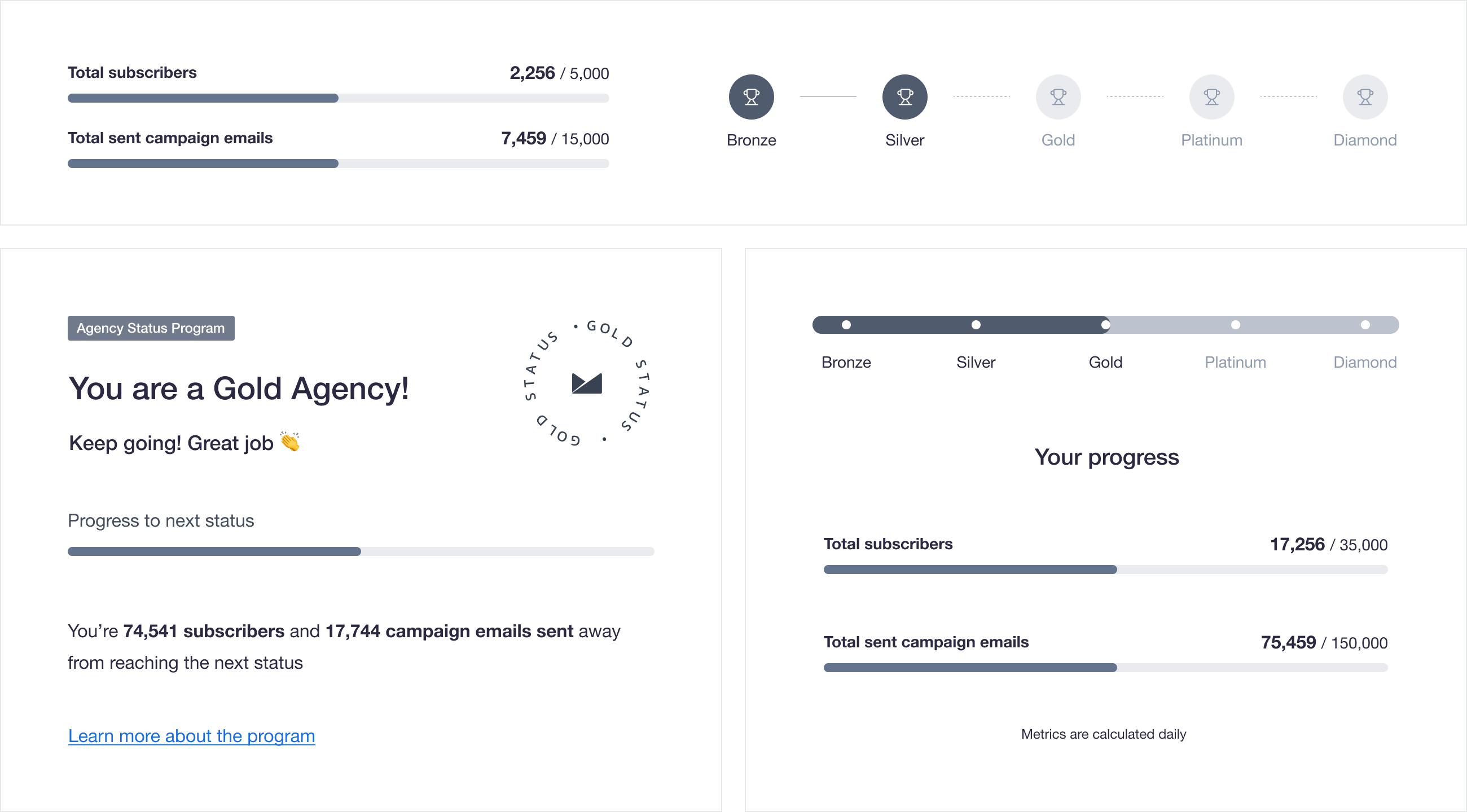
Built around two transparent and actionable metrics
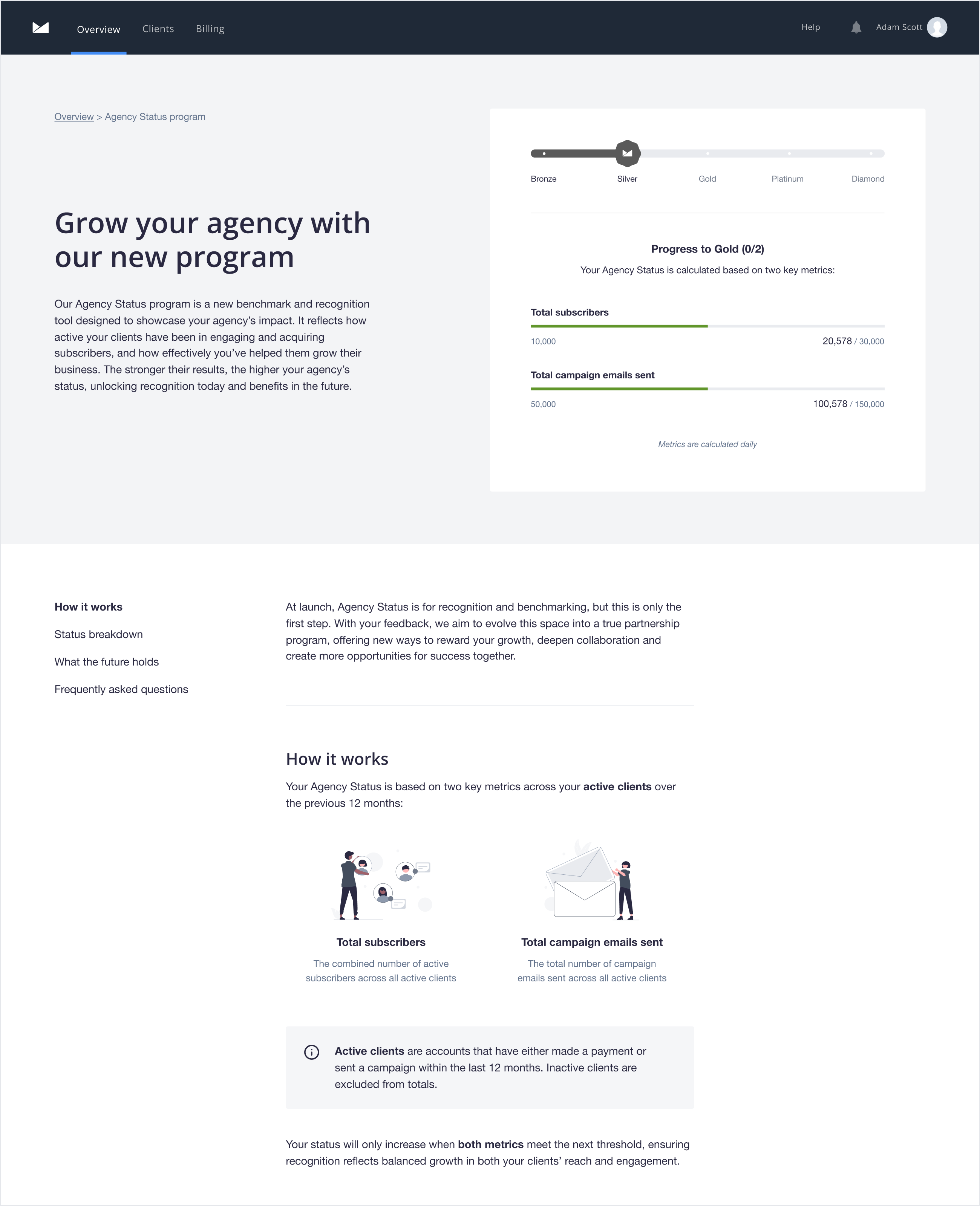
Status is calculated using a combination of total subscribers and campaign send volume across the previous 12 months. I designed the experience around these metrics so agencies could clearly understand what drives their status and what actions would help them progress.
A status component and dedicated program page
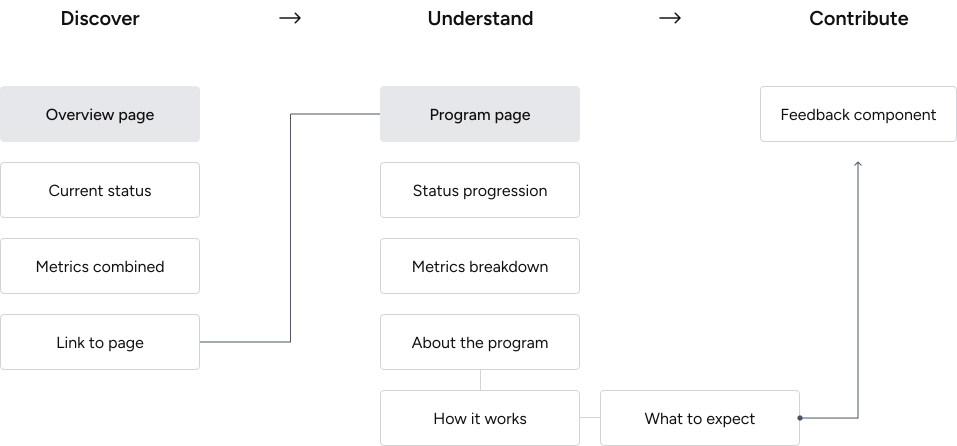
I designed a status component within the Agency Overview page to surface status, progress and next steps in context. For further detail, a dedicated program page provided a deeper explanation of how the program works, how progress is calculated, and where the program was headed next.
Used transparency to build trust in the beta
The dedicated program page openly explained the beta program, how status was calculated, and what future iterations might include. This helped set expectations while creating anticipation for future benefits and incentives, making the release feel considered rather than incomplete.
Invited agencies to shape the program
An embedded feedback widget gave agencies a direct way to share thoughts and suggestions. This reinforced the idea that the program was being built alongside them, while providing valuable input for future releases.
Impact
High-value agencies at a glance
The business now has an efficient and accurate method to identify top-contributor agencies, establishing a foundation to reward and support those partners in the future.
A meaningful distinction for top performers
Diamond status identified the highest-performing agencies, acknowledging their effort and positioning them as top contributors on the platform.
Validated the foundation before scaling
1,000+ agencies shaped the program during the beta, giving the team real insight to work with as the program moves toward a full release.